Madison lawns usually look their best when the care plan stays ahead of the season.
A Madison lawn can look polished from the curb and still be fighting a few quiet problems underneath. The grass may green up nicely in spring, but once the stronger heat shows up, the weak areas begin separating from the rest of the yard. One section starts thinning, another loses color faster than it should, and weeds begin taking advantage of the places where the turf no longer feels solid.
That kind of pattern is common in lawns that need more than routine mowing and occasional feeding. In Madison, some yards are dealing with mixed sunlight from one side of the property to the other. Some are dealing with soil that has tightened enough to limit root growth. Some simply need better timing, because the lawn is being treated after stress shows up instead of before.
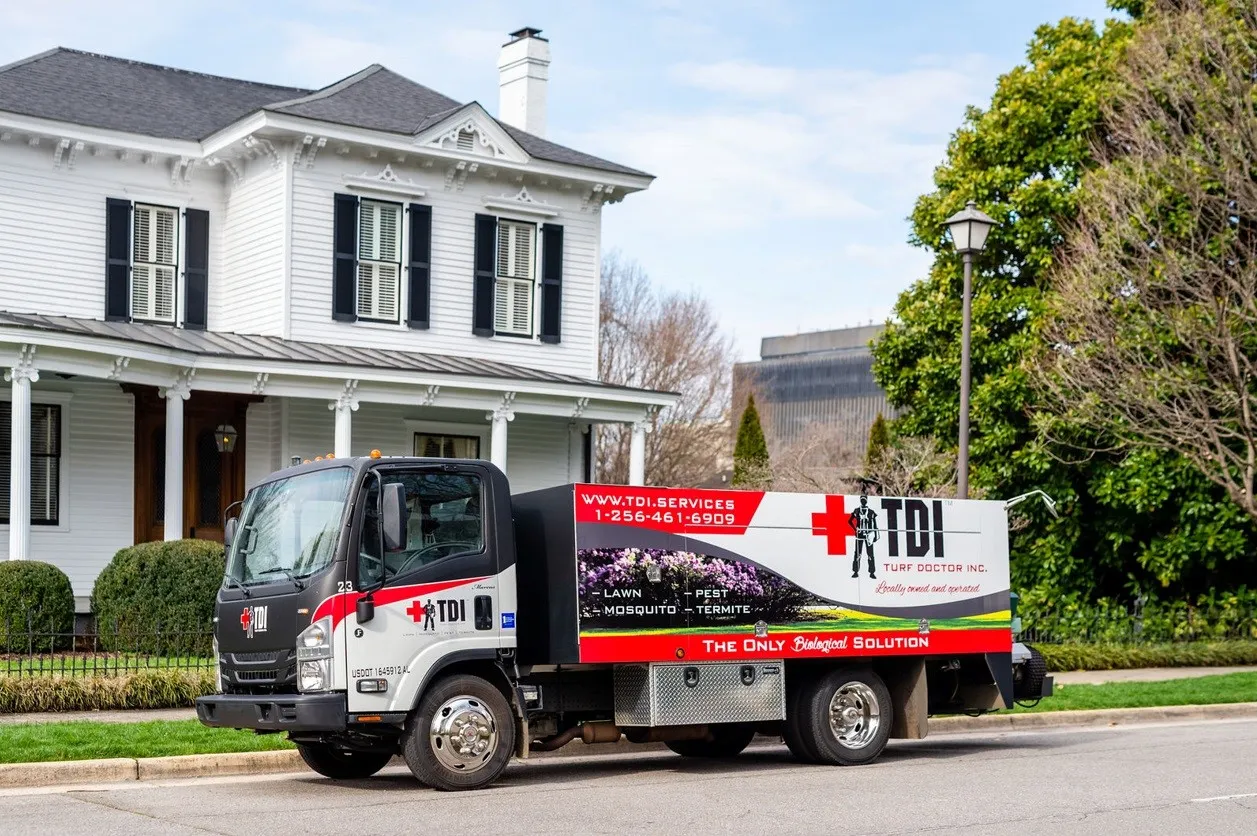
TDI Green Services helps homeowners with lawn care services in Madison, AL that are built around how the lawn is actually responding. Some properties need stronger turf support. Some need weed control that helps the lawn reclaim open space. Others need a broader seasonal plan that keeps the yard more even, more durable, and easier to maintain throughout the year.
The best-looking lawns usually have healthier structure underneath them.
A complete lawn care plan in Madison should do more than fix one visible issue. A lawn may look like it only needs weed control, but the bigger problem could be low density. It may look like it only needs fertilizer, but the real issue may be soil that is not letting the turf use those nutrients well. That is why the best results usually come from treating the lawn as a whole system.
A lawn that stays full through changing weather usually has stronger support below the surface. Fertilization helps the turf build color and growth, while soil health helps the lawn use that support in a way that lasts. In Madison, that often means steadier performance, better root development, and a yard that holds up more consistently from one month to the next.
Weeds often show up where the turf has already started slipping. Thin sections, worn edges, and underperforming spots give them an easy opening. TDI Green Services uses weed control in Madison to help reduce active weed pressure and prevent those weaker parts of the lawn from turning into larger problems.
Some Madison lawns never seem to thicken properly because the soil has become too dense for roots to spread well. Aeration helps open that compacted layer so oxygen, water, and nutrients can move more freely. Overseeding can also improve cool-season sections that have become sparse or uneven over time.
A lawn can keep losing quality even when the homeowner is watering and mowing correctly. Insect activity is often part of that hidden stress. Grubs affect the root zone, while chinch bugs, armyworms, and sod webworms can wear down the grass from above. Lawn pest control in Madison helps reduce those setbacks before they leave the yard looking noticeably weaker.
Some lawns lag behind because the soil is out of balance, not because the yard is being ignored. When pH is off, nutrient availability can suffer and the turf may not respond as expected. Lime can help in the right circumstances and may improve how the lawn uses the rest of its care program.
When heat, moisture, and turf stress overlap, disease can also become part of the problem. If the lawn is fading irregularly, developing unusual patches, or thinning in ways that do not match normal summer wear, a closer evaluation can help determine the next step.
The right grass choice can make Madison lawn care much easier.
A lawn is easier to maintain when the turf type matches the conditions of the property. Madison yards can have sunny front lawns, shaded side sections, and backyards that respond differently to moisture and traffic, so the best fit depends on how the site actually behaves.
Bermuda is often a dependable choice for sunny Madison lawns because it handles heat well and stays active through the warm season. Zoysia is another strong option in many open yards and can build a dense, attractive surface over time. Centipede may fit some lower-maintenance properties, while St. Augustine may work in select locations with the right site conditions.
Tall Fescue is often the more practical cool-season option where shade changes how the lawn grows or where a cooler-season appearance makes more sense. In the right parts of the yard, it can be a better answer than forcing warm-season turf into areas where it never performs evenly.
A Madison lawn usually needs different support as the year unfolds.
Spring is when the lawn first shows whether it is coming back evenly. Weak green-up, thin turf, and early weeds often make the problem areas easier to spot before summer stress starts building.
Summer heat can quickly widen the gap between strong turf and weak turf. Shallow roots, thin coverage, and insect activity all become harder on the lawn once temperatures stay high for long stretches.
Fall is an important time for rebuilding. It gives the turf a chance to regain density, improve recovery, and strengthen the areas that did not hold up well during summer.
Winter can make recurring weak zones easier to identify. Once the lawn slows down, it becomes much clearer which areas are consistently underperforming and which parts need a better plan before spring returns.
Most lawn trouble shows itself early if you know what to watch.
Madison lawns can be affected by grubs, armyworms, chinch bugs, and sod webworms. These insects weaken turf in different ways, but all of them can leave the yard thinner and less resilient.
Crabgrass often spreads through open areas, clover tends to show up where the turf lacks strength, dandelions reseed quickly, and nutsedge stands out where soil moisture stays uneven.
Madison lawns usually respond best when care matches local conditions instead of generic timing.
Madison lawns typically grow through long warm seasons, summer heat that can expose weak turf quickly, and soils that may support good growth while still compacting over time. That means a lawn may seem to have enough water and care on the surface while still struggling below. Lawns in Madison usually perform better when treatments are timed around local seasonal pressure instead of waiting until decline becomes obvious.
The best lawn care usually starts with understanding what the yard keeps struggling against.
TDI Green Services understands that a Madison lawn often does not fail all at once. It loses consistency first. One part of the yard starts lagging, another becomes easier for weeds to invade, and the lawn slowly becomes less balanced than it used to be. That kind of decline usually calls for clearer diagnosis and better follow-through, not just more random applications.
Our goal is to help the lawn become more dependable from the ground up. Stronger roots, cleaner turf, better density, and steadier seasonal recovery all contribute to a yard that looks better and takes less ongoing frustration to manage.
A better lawn process should feel clear from the first step.
Reach out and tell us what your Madison lawn has been doing. That may mean thin turf, uneven color, recurring weeds, weak recovery, or a yard that never seems to stay consistent.
A technician reviews the property and looks at the patterns behind those symptoms. We focus on what is limiting performance, not just what looks rough at the moment.
After the review, we recommend a lawn care plan that fits the property. That may include fertilization, weed control, aeration, overseeding, insect treatment, lime, or broader seasonal support.
The selected service is then applied with straightforward guidance so you know what to expect next and how to help the lawn respond well.
Many lawns improve best when progress is built over time. Continued care helps the turf gain consistency instead of returning to the same weak spots every season.
Frequently Asked Questions
If your Madison lawn keeps falling into the same pattern of thinning, weeds, and uneven performance, it may be time for a more deliberate plan. TDI Green Services can help you move toward turf that stays fuller, cleaner, and more reliable through the seasons.