

How Do Trees Survive In The Winter?
Trees are up against two main obstacles during winter: lack of liquid water and frigid cold temperatures. Tree tissues cannot take up water from snow as it melts because exterior bark acts as a tight barrier. The bark is also positively functioning as the primary protective layer that shields tree tissue from physical damage.
Trees hibernate during winter, going into a state called dormancy. All of the regular processes slow down, including metabolism, growth, and energy consumption. Leaves fall early on in dormancy so that the tree doesn’t have to spend energy supporting them.
Before dormancy begins, trees take up extra water and stock their cells. Water is moved and stored between the tree cells to keep them from freezing and dying during extreme cold. That water inside the tree actually does freeze, but first gives off a small burst of heat; enough to keep the tree cells alive. Finally, to further adapt and tolerate the cold, trees transform starch to sugar inside their cells. And that’s the secret science of how trees survive winter!
What Is Winter Die-Off?
Despite all the natural strategies trees have to survive the winter cold, not all parts of the plant always remain intact. Winter die-off is an injury that occurs when parts of the tree freeze and die off during the winter. These parts of the tree no longer produce new cells or growth.
Tree limbs that suffer from winter dieback are vulnerable to breakage and falling without warning. This becomes a big liability in high winds and spring storms!
Outward signs of winter die off:
- Vertical cracks or holes where the bark is missing
- Dry brittle wood that easily breaks off
- Large amounts of fungus
- Exposed smooth wood with almost no bark
- Sores or cankers on branches
Other Types Of Winter Tree and Shrub Damage
Sun Scald
Sometimes referred to as southwest injury, Sun scald usually occurs on the southwest side of developing tree trunks. In Colorado, December through March are the months when young or thin-barked trees may be at risk. Colorado receives more sun than other parts of the country during the cold winter months, so sun scald happens more frequently here.
For example, a typical sunny winter day in Denver could reach 60 degrees Fahrenheit. High-intensity winter sunlight heats up the tree trunk and causes it to come out of dormancy. Tree cells and tissue become active again, only to be killed when the sun goes down and temperatures plummet at night. Over time, this injury may appear as sunken and discolored bark. The bark could even fall off, revealing dead tree tissue.
Leaf Scorch
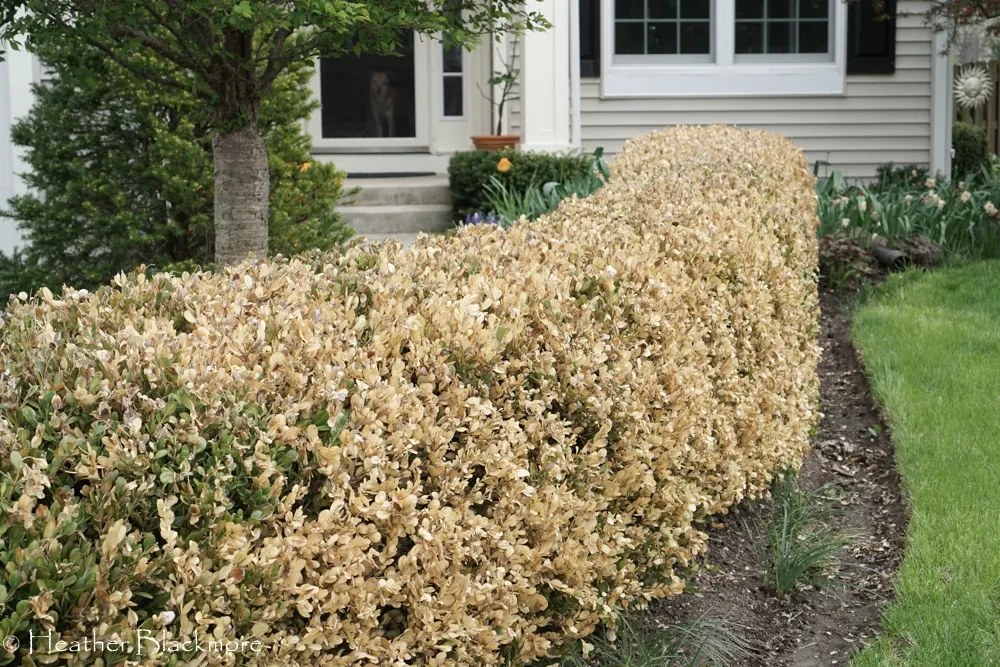
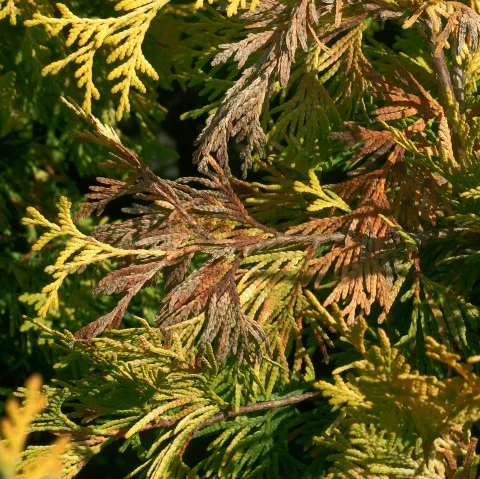
Leaf scorch is simply the browning of plant tissues caused by unfavorable weather conditions. Plants are primarily at risk for injury on dry, windy, warm or sunny winter days when the ground freezes. Under these circumstances, plants can’t move water from the frozen soil to replace the water missing from the exposed leaves. As a result, leaves curl and become limp. Next, they brown at the tips and the veins, looking scorched. You may see some plants with leaves that roll up and inward. This is a coping mechanism. The plant is trying to reduce leaf exposure.
Desiccation
This type of damage occurs when a plant’s tissues dry out from wind or ice-melting chemicals, lack of moisture in the air or soil. Some tree species, such as Evergreens, are more vulnerable when they are dormant because their leaves never stop losing water.
The ground freezes in winter, making it difficult for root systems to take up water. Damage to the foliage becomes visible when the roots are taking in as much water as the leaves evaporate. The damaged leaves are usually on the side of the plant facing the wind, where most of the evaporation happens.
Salt Injury
Soil nutrients and composition is important to the health of trees and shrubs year-round, but especially in winter. Dissolved salts in road runoff can alter the structure of the soil, causing it to become compacted. In this state, trees access to nutrients, water, and oxygen is limited. This puts the tree or shrub under stress and causes damage to shoot tips and young leaves.
Does your city management get heavy-handed with deicing salt? Airborne spray and surface application of salt along your property’s sidewalk and street curb can cause leaf scorch. It can even kill buds and branch terminals! When desiccation occurs to vulnerable tissue in the buds, the damage is irreversible. In the soil, salt can accumulate and cause roots to die from desiccation as well.
Blighting of New Growth
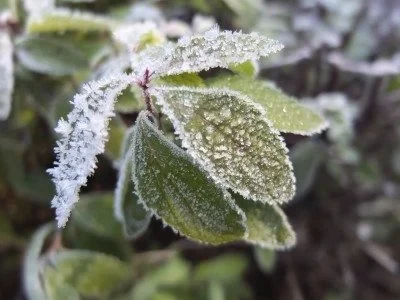
When temperatures spike, and we experience an unseasonably sunny warm day in February or March, plants get confused. The strange shift in temperature can stimulate buds or shoots on trees and plants to develop too early. Then cold weather and frosts return immediately killing the new growth. This also hurts future leaf development. The result is dark buds and leaves that drop off.
Frost Damage and Cracking
When pavement warms and cools it will crack over time due to the extreme temperature changes. Trees can experience a similar phenomenon. Trees with thin bark that receive both direct and reflected sunlight can experience bark temperatures into the 70-degree range, even though the air temperature is below freezing! If water moves into the warm under bark tissues, the tree will be vulnerable to rapid freezing and tissue death. In the spring, the tissues dry-out and then crack, usually on the south or southwest side of the tree. Fruit trees are very susceptible to this problem.
Blasting of Blooms
Star magnolia and lilac flowers are most vulnerable to this type of damage. It happens when flower buds swell and then freeze during cold snaps or late frosts.
Ice and Snow Damage
Tree limbs and shrubs can become weighed down under the weight of heavy snowfall and ice, resulting in bent or disfigured branches. Gently remove snow to alleviate the burden from the tree. Ice cannot be removed from branches. Attempting to deice a tree can actually cause further damage to brittle branches.
What to do with damaged shrubs?
Once the threat of frost has passed, prune back the damaged foliage if it hasn’t already dropped on its own. Pruning stimulates new growth and in most cases, the plant will fill back in. It is hard to know the full extent of the damage until spring when the plants are activley growning and coming out of dormancy.
Blog Contributor: Michael Stewart
Michael Stewart serves as the Madison Branch Manager for TDI, with 30 years of experience. He holds Alabama certifications in Ornamental and Turf Pest Control Commercial Applicator, Household Pest Control, Ground Equipment, Wood Destroying Organisms Certified Operator, Right of Way Commercial Applicator, and Public Health. He also holds Tennessee certifications in Ornamental and Turf Pest Control Commercial Applicator and Household Pest Control.