
Learn Why Mulching Is So Important for Properties in Alabama
Key Takeaways:
- Mulch is any organic or inorganic material spread over bare soil
- Organic mulch typically decomposes over time, while inorganic mulch usually doesn’t
- In Alabama’s heat and humidity, mulch does more protective work than in almost any other climate
- Garden mulching and lawn mulching are two different practices, but both reduce how much time and money you spend maintaining your yard
- Get a thriving landscape with help from TDI Services, the local lawn care and pest control experts in Alabama.
What Is Mulch, Really?
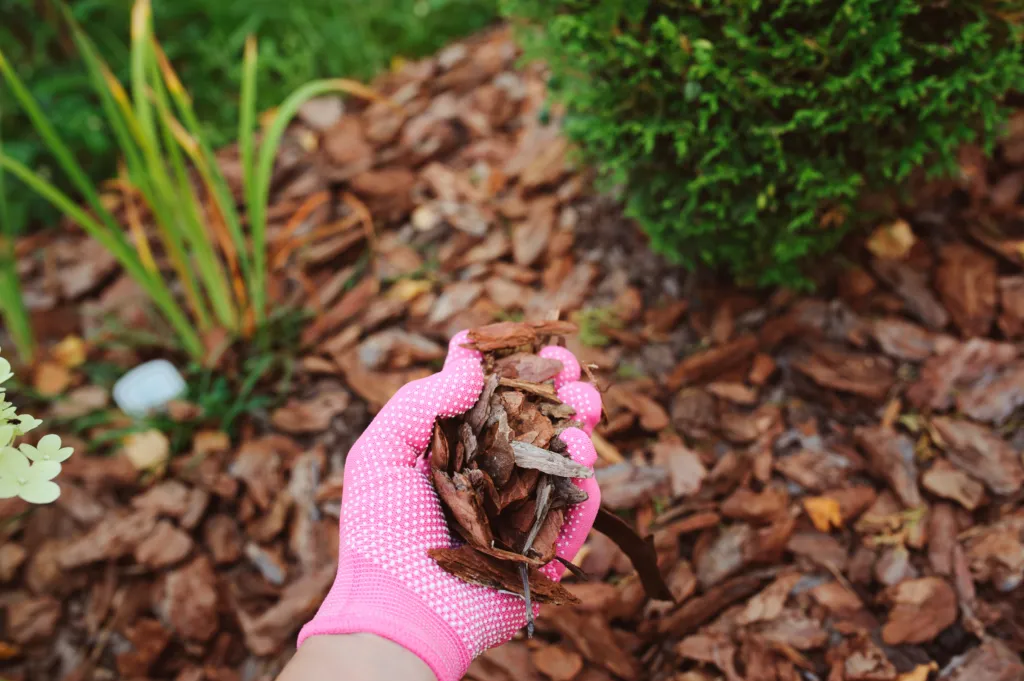
Mulch is any material spread over bare soil to protect or improve it. That definition covers bark chips, pine needles, straw, shredded leaves, gravel, rubber, and grass clippings.
The purpose of mulch? To keep the soil covered. Because when you do that, a whole set of problems either go away or become significantly more manageable.
Some mulches are organic, meaning they’re derived from plant material and will decompose over time, gradually returning something to the soil as they break down. Others are inorganic, like gravel, crushed stone, or landscape fabric, built to stay put for years without contributing anything to the soil nutritionally.
FYI: Mulch and compost are not the same thing. Mulch stays on top of the soil, working at the surface. Compost gets worked into the soil to feed plant roots directly.
What Does It Do for an Alabama Yard?
This is where the real answer to “what is mulch?” starts to come into focus. Alabama summers are long, hot, and humid. So any bare soil quickly loses moisture during sunny summer days.
While the Gulf Coast region gets rainfall, stretches between rain events can leave unprotected soil dried out and compacted in ways that stress plants and drive up irrigation costs.
It holds moisture where plants need it. Mulch significantly slows evaporation from the soil surface. That means the water that reaches your soil stays available to roots longer.
It keeps soil temperatures from swinging too hard. The same layer that insulates soil from summer heat protects roots when temperatures drop in December and January.
It suppresses weeds before they establish. A two-to-four-inch layer of mulch blocks the sunlight that weed seeds depend on to germinate. It won’t stop every weed from trying, but it cuts down on how many succeed.
It gives the yard a finished quality. A consistently mulched bed looks intentional in a way that bare dirt simply doesn’t.
Garden Mulching vs. Lawn Mulching
The word “mulching” covers two different practices, and it’s useful to understand both.
In garden beds, mulching means spreading material over the soil around your plants. That could be bark, leaves, straw, gravel, or whatever suits the space.
On the lawn, mulching means finely cutting grass clippings and letting them fall back into the turf. The clippings settle between grass blades within a day or two and decompose into the soil, returning nitrogen, potassium, and other nutrients in the process.
For Alabama’s warm-season grasses (Bermuda, Zoysia, St. Augustine, etc.), that nutrient return during the long growing season has a compounding effect on turf health that most homeowners underestimate.
Organic vs. Inorganic: What Is Mulch Made Of?
Organic Mulch
Bark, wood chips, pine needles, shredded leaves, straw, hay, grass clippings, and layered newspaper. This is anything plant-based that will eventually decompose. So the material needs to be replenished periodically, but it also boosts the soil, making it more fertile and biologically active as microbes and earthworms process it over time.
For vegetable gardens, flower beds, and anywhere you care about long-term soil health, organic mulch is almost always the stronger choice. In Alabama, where soils can lean toward clay or sandy depending on the region, that gradual improvement in structure and drainage has real value.
Inorganic Mulch
Gravel, crushed stone, rubber chips, plastic sheeting, and landscape fabric don’t decompose. This makes them low-maintenance and long-lasting, but they give nothing back to the soil.
This is a good choice around foundations, trees, and shrubs that prefer dry or rocky conditions. But once inorganic mulch is installed, removing it is difficult. So be deliberate about where you put it.
A Quick Guide to Common Materials
Bark and wood chips: A great choice for trees, shrubs, and foundation beds. Coarser material holds up better through Alabama’s wet seasons but makes digging more difficult when you want to add plants later.
Pine straw (pine needles): Widely available throughout Alabama and a natural fit for the region. It resists compaction, allows rainfall to pass through easily, and breaks down into the soil over time.
Shredded leaves: Free every fall and excellent for building soil biology. Plus, earthworms are drawn to decomposing leaf material.
Grass clippings: Best suited for lawns or garden areas where fast nutrient cycling is the goal. Keep layers thin since thick or wet clipping applications mat together and block water.
Straw and hay: A practical option for vegetable gardens and paths. They reduce disease splash onto lower plant foliage and hold up long enough to last through a growing season.
Newspaper: Several sheets moistened and covered with another organic mulch creates a surprisingly effective weed barrier that eventually biodegrades.
Plastic and landscape fabric: Effective for weed control around established shrubs and foundations, but plastic restricts air and water movement and can damage soil biology over time.
Gravel and stone: Well-suited to rain gardens, drainage-focused spots, and drought-tolerant plantings. Know what your plants prefer before committing to something that’s hard to remove.
The Case for Mulching Your Lawn
Lawn mulching tends to get overlooked in favor of more visible practices, but for Alabama homeowners with warm-season turf, it’s one of the highest-return habits you can build into your mowing routine.
Every bag of grass clippings you’ve been sending to the curb contains nitrogen and potassium that could have gone back into your soil. Returned via mulching, those nutrients feed the grass from below over the course of a growing season. The cumulative effect is stronger roots, denser turf, and improved moisture retention.
Timing Mulch Correctly in Alabama
Alabama’s climate creates a longer effective mulching window than most of the country, but timing still matters.
For garden beds, late winter through early spring is the ideal window. Soil in Alabama warms early, and getting mulch down before spring weeds germinate gives you a meaningful head start.
A second application in early fall helps protect roots through winter, keeps beds looking fresh, and gives organic material time to begin breaking down before growth slows.
For lawns, Alabama’s warm-season grasses allow for a longer mulching season than cool-season climates do. Mid-spring through summer is the most productive window, when growth is vigorous and consistent.
An early fall pass while grass is still actively growing returns nutrients before the lawn slows down for winter. When growth slows or the lawn is staying wet for extended periods, switch back to conventional mowing.
When Lawn Mulching Isn’t the Best Idea
Wet or shaded lawn areas. Persistent dampness and shade create conditions where clippings clump rather than disperse. Those surface piles block light and airflow and can trigger fungal problems.
Overgrown grass. A lawn that’s gotten ahead of the mowing schedule produces too much clipping volume for mulching to handle cleanly. Mow conventionally, collect the clippings on the first pass, and return to mulching once the height is back in range.
Irregular mowing. Mulching depends on consistency. Skip sessions and clippings grow too long and heavy to decompose usefully. If weeds have had time to set seed in the interim, mulching those areas risks distributing seeds across the lawn rather than feeding it.
New or struggling turf. Young grass needs time to establish before mulching. And moss should never be mulched.
Common Questions About Mulch
-
Is mulch necessary in every garden?
No. Some plants and soil types genuinely perform better with exposed ground. That said, in Alabama’s heat, humidity, and sandy or clay-heavy soils, the moisture and temperature benefits make mulch a strong default choice for most situations.
-
Does lawn mulching cause thatch?
No, and this is one of the most persistent myths about the practice. Thatch is made up of accumulated dead roots and stems, not finely cut grass clippings that decompose quickly with regular mowing.
-
Can I mulch leaves into the lawn?
Light, dry leaves can be finely cut into the turf alongside grass clippings without issue. Thick, matted, or wet leaf layers are a different story. Collect and compost those rather than trying to mulch them into the grass.
-
Does mulching spread weeds?
Consistent mowing prevents most weeds from reaching the stage where they produce viable seed. The risk is specific: mulching overgrown areas where weeds have already gone to seed can scatter those seeds widely. Regular, timely mowing prevents that situation from developing.
-
How much mulch do I need?
Two to three inches for garden beds. Lawn clippings should form a thin, barely visible layer that disappears into the grass within a day or two. If material is sitting visibly on the surface longer than that, adjust mowing frequency or cut height.
Treat Your Alabama Lawn Right!
What is mulch worth to your yard? Less time watering, fewer weeds pulling your attention, healthier roots through Alabama’s long summers and occasional winter cold snaps, and a landscape that looks like someone’s paying real attention to it.
Get the material, depth, and timing right, and mulching becomes one of the lowest-effort, highest-payoff habits in your entire lawn care routine.
Want to enjoy your spare time instead of doing yard work? Reach out to TDI Services in the Gulf Coast of Alabama. With highly trained technicians and industry-leading products, we’ll take steps to help achieve your dream yard.